Posts

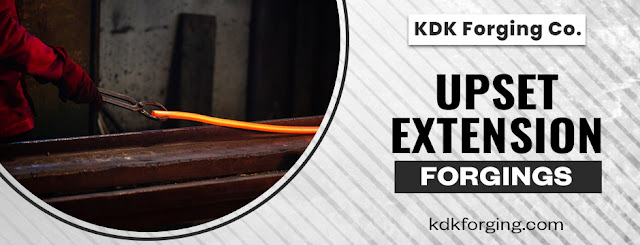
Innovation in Forging: Exploring New Applications for Upset Extension Forgings
Image
  Forging is a dependable and adaptable process that produces high-strength components with remarkable longevity in the manufacturing industry. Among the various forging techniques available, upset extension forging stands out for its ability to create complex shapes and intricate geometries with superior mechanical properties. In this blog, we'll delve into the innovative applications of Upset Extension Forgings , exploring how this advanced forging technique is revolutionizing industries and driving new possibilities in engineering and design. Detail About Upset Extension Forgings Before delving into the innovative applications, let's first understand what these forgings entail. Upset Extension Forging is a specialized forging process that involves extending the length of a workpiece while simultaneously reducing its cross-sectional area. This is achieved by applying compressive force to the end of the workpiece, leading to its extension and deformation. The result is a compo...

Press Part Forgings: Applications and Industries They Serve

Image
  Press Part Forgings play a critical role in various industries, offering a variety of applications due to their exceptional strength, durability, and precision. From automotive to aerospace, this forging is utilized in numerous sectors to manufacture components that withstand extreme conditions and demanding environments. Here in this blog post, you will come to explore the diverse applications of this forging and the industries they serve, highlighting their importance in modern manufacturing. Automotive Industry These types of forgings are extensively used in the automotive industry for manufacturing critical components such as engine parts, transmission systems, steering components, and suspension parts. These components require high strength, precision, and reliability to ensure optimal performance and safety in vehicles. In engine manufacturing, press part forgings are used to produce crankshafts, connecting rods, and camshafts, which are subjected to high levels of stress ...

Innovations in Eyebolt Design: What's New in the Market

Image
Eyebolts , once a simple piece of hardware, have evolved significantly over the years. Innovations in design have not only improved their functionality but have also opened up new possibilities for various industries. In this exploration of the latest trends, you will delve into the cutting-edge innovations shaping the world of eyebolt design. Smart Eyebolts: The Integration of IoT As the world becomes more connected, so do our tools. Smart eyebolts equipped with Internet of Things (IoT) technology are revolutionizing the way we approach safety and maintenance. These intelligent things come embedded with sensors that monitor factors such as load, stress, and temperature in real time. This data is then transmitted to a central system, providing users with valuable insights into the health and performance of this material. This enhances safety and allows for proactive maintenance, reducing the risk of failure and ensuring a longer lifespan for the hardware. 3D-Printed Eyebolts: Tailored...

Mastering the Art of Closed Die Forgings: Exploring Key Features

Image
Closed die forging is a remarkable metalworking process that has been used for centuries to create strong and durable metal components. Here in this blog, you will be able to know about the world of these forgings and explore their key features. If you're a newcomer to the world of metallurgy or a seasoned professional, understanding the features of these forgings is essential. About Closed Die Forgings Before we dive into their features, let's first understand what these forgings are all about. The Basics of Closed Die Forgings These forgings, also known as impression die forgings, are a metalworking process that involves shaping a piece of metal into a desired shape by applying compressive forces. This is achieved by placing the metal between two dies (molds) and then subjecting it to high pressure. The dies are specially designed to create the desired final shape. Key Features of Closed Die Forgings Now, let's explore the distinctive features that make these forgings a ...

5 Practical Applications of Eyebolts (Small Screw Forgings)

Image
Eyebolts , a type of small screw forging, are versatile fasteners with a looped head, often used for lifting, rigging, and securing loads. Their unassuming design belies their essential role in various applications across different industries. In this blog, we will explore five practical applications of eyebolts, highlighting their significance in ensuring safety, convenience, and efficiency in a range of tasks. Construction and Rigging In construction and rigging, this forging is indispensable for hoisting and securing heavy materials and equipment. Whether it is lifting steel beams, suspending concrete forms, or securing scaffolding, the forging provides a reliable anchor point. These small but robust fasteners are often installed in structural elements, such as beams and columns, to facilitate vertical and horizontal lifting operations. Their load-bearing capacity, when used correctly, ensures the safe movement of materials and machinery, contributing to efficient construction proce...

Forging Strength and Precision: The Art of Closed Die Forgings

Image
Closed die forgings , also known as impression-die forgings or precision forgings, are a significant process of manufacturing used to create complex, high-strength metal components. In this blog, you come to know about every detail of these forgings, exploring the process, advantages, applications, and the key role they play in various industries. About the Closed Die Forging Process Closed die forging is a metalworking process that involves shaping heated metal billets or ingots into finished components using high-pressure and precision tooling. There remain some key steps of this process and those steps are:  Billet Heating: The metal billets, typically made from steel or aluminum alloys, are heated to a specific temperature to enhance their malleability for shaping. Die Preparation: The dies, also known as tooling or molds, are precision-engineered to create the desired component shape. The dies consist of a top and bottom half, forming a closed cavity that defines the final ...